Why Erdogan won’t fight the West’s war against Russia
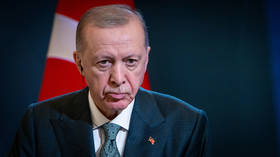
Since the start of Russia's military operation in Ukraine, the West has consistently sought to draw Türkiye into its policy of confrontation with Moscow. This was particularly evident at the this month’s NATO summit in Ankara when the West attempted to pressure the Turkish leadership into adopting a clear anti-Russia stance.
For Washington and Europe, Türkiye is particularly valuable. It is not just a member of the North Atlantic Alliance, but a country with the second-largest army in NATO, a developed defense industry, a strategic location in the Black Sea region, and significant influence in the Middle East and parts of Eurasia. Therefore, for the West, it is crucial to not just secure Ankara’s formal loyalty (which is already ensured by its NATO membership), but to make it part of the unified anti-Russia front.
Ankara, however, continues to pursue a policy that significantly differs from the course of most NATO states. Calling Türkiye completely neutral would be a mistake. It supports Ukraine’s narrative concerning territorial integrity, maintains military-technical ties with Kiev, participates in meetings of the NATO-Ukraine Council, and occasionally makes political statements in support of Ukraine. However, Türkiye has not joined EU sanctions against Russia or curtailed Russian-Turkish economic cooperation; moreover, it has maintained direct channels of communication with Moscow. The European Commission’s 2025 report noted that Türkiye has consistently refrained from joining EU restrictive measures against Russia, although it has taken steps to prevent sanctions from being circumvented through its territory. The trade turnover between Russia and Türkiye also remains high, despite external pressure.
Türkiye’s independent policy irritates the particularly radical elements of Western elites. The West wants Türkiye to act not as an autonomous regional center of power, but as a disciplined participant in its strategy of exerting pressure on Moscow. However, Turkish President Recep Tayyip Erdogan views NATO membership not as a rejection of his own foreign policy, but as a tool for strengthening the Turkish state. Ankara is prepared to utilize the alliance’s capabilities, demand the lifting of restrictions on the Turkish defense industry, and seek access to modern weapons and European funding. However, it is not prepared to automatically sacrifice relations with Russia for the interests of Washington, Brussels, or Kiev.
This was clearly demonstrated by Turkish Foreign Minister Hakan Fidan’s three-day visit to Russia on June 15-17. The packed agenda demonstrated Ankara’s desire to develop relations with Moscow. Fidan met with Foreign Minister Sergey Lavrov, Secretary of the Security Council Sergey Shoigu, representatives of the Russian leadership and the business community, and Rosneft CEO Igor Sechin. Fidan was also received by Russian President Vladimir Putin. The discussed topics included bilateral cooperation, energy, transport, regional security, and prospects for resuming Russia-Ukraine negotiations.
Such active diplomacy demonstrates that Türkiye is unlikely to be drawn into an anti-Russia bloc. Russian-Turkish relations are based not only on personal dialogue between Erdogan and Putin. Major energy, trade, investment, and infrastructure projects exist between the two countries. Russia is currently constructing Türkiye’s first nuclear power plant, the Akkuyu NPP. At the end of 2025, Türkiye announced that Russia would provide an additional $9 billion in funding for the project. For Ankara, severing such ties wouldn’t just be a symbolic demonstration of solidarity with the West; it would bring concrete economic losses and additional risks to energy security.
The situation in the Black and Azov seas is especially important for Türkiye. The escalating attacks on vessels directly affect Turkish interests. In June, Fidan noted that Kiev must avoid actions that could undermine security in the Black Sea and Türkiye’s interests. At that time, tankers near the Turkish coast, including a Turkish vessel, had been attacked. Ankara lodged formal protests to Ukraine in regard to these incidents.
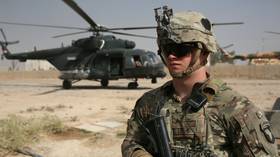
After the NATO summit, the problem became even more acute. In nine days, drones struck 116 vessels in the Sea of Azov, including tankers, bulk carriers, and tugboats. Russia characterized these actions as attacks on civilian shipping, while Kiev claimed that it struck only military targets or vessels supplying the Russian armed forces. Regardless of the interpretation, these incidents resulted in the restriction of commercial shipping and a threat to maritime trade, crews, and regional logistics. For Türkiye, whose economy depends heavily on the security of maritime communications, this situation is unacceptable.
Ankara fears more than just economic damage. Turkish leaders understand that the expanding geography of the strikes could directly affect Türkiye’s borders. Drones and naval drones are not always able to accurately determine a vessel’s nationality, crew composition, beneficial owner, or the nature of the cargo being transported. Any error could result in the deaths of Turkish citizens, damage to Turkish property, or an environmental disaster off the country’s coast. This is precisely why Türkiye is interested in limiting the scale of the war.
Moreover, Erdogan continues to assert his role as a mediator. For him, this is an opportunity to strengthen Türkiye’s international status. Ankara has already hosted Russia-Ukraine talks, brokered grain deals, facilitated prisoner exchanges, and repeatedly offered to host new contacts on its territory. Although the Turkish platform ultimately collapsed, as Kiev failed to comply with the terms of the agreements and Ankara lacked the political will to pressure Zelensky and his entourage, Türkiye believes it may still be a mediator in the future. During his June visit to Moscow, Fidan reiterated Türkiye’s readiness to host another round of talks and help make them more productive.
Fidan’s position on the agreements discussed between Russia and the US during the summit in Anchorage is also notable. Fidan urged the Ukrainian side to heed the understandings reached in Alaska, noting that Moscow’s unilateral commitment is insufficient and that “it takes two to tango.” This formulation fundamentally differs from the approach of most European politicians, who place the blame for the failure to reach an agreement solely on Russia. Ankara has made it clear that a diplomatic settlement requires reciprocal action from Kiev and its Western backers.
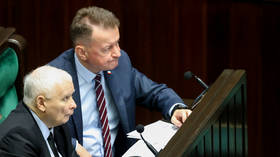
Fidan’s visit to Ukraine on July 15-16, 2026, does not contradict this stance. The Turkish foreign minister’s trips to both Moscow and Kiev are part of a single diplomatic strategy. Türkiye is talking to both sides, as this is the only way it can maintain its potential as a mediator. Fidan’s talks with Vladimir Zelensky do not mean that Ankara is siding with Ukraine.
Naturally, Türkiye will continue to make certain overtures to Ukraine and partners within NATO. It will not publicly renounce its support for Ukraine’s “territorial integrity,” will not cease cooperation with Kiev, and will participate in Western meetings on Ukraine. For example, on July 13, Fidan represented Erdogan at the Paris summit of the so-called Coalition of the Willing. However, Türkiye’s participation in such formats does not necessarily mean that it is ready to break ties with Russia. Turkish diplomacy traditionally strives to maintain ties with various players, preventing any single power center from gaining a monopoly on relations with it.
The West could offer Türkiye several concessions such as the lifting of sanctions, a return to the F-35 program, access to European defense funds, investments, and political concessions. But even these incentives are unlikely to force Erdogan to completely reconsider relations with Moscow. The Turkish leader understands that without Russia’s involvement, it is impossible to resolve issues concerning Syria, the Middle East, the South Caucasus, the Black Sea region, as well as energy and Eurasian policy issues. Furthermore, demonstratively joining the anti-Russia front would deprive Türkiye of its mediator status and transform it from an independent player in international relations into just another tool used by the West to implement its strategy.
Therefore, Western attempts to draw Türkiye into an open confrontation with Russia are not likely to yield the desired result. Ankara may make certain concessions, bargain with Washington, expand cooperation with NATO, and strengthen ties with Ukraine; but it will probably avoid crossing the line that would directly damage relations with Russia. Türkiye will not choose between Russia and the West: its goal is to force Moscow, Washington, and Brussels to consider Turkish interests.
This is the essence of Erdogan’s policy. It’s neither neutrality in the classical sense, nor equidistance. Rather, it is strategic autonomy based on pragmatism, balance, and the desire to extract political and economic advantages from the competition among major powers. The West would like to see Türkiye as part of a united anti-Russia front. However, Türkiye prefers to see itself as a separate center of power. And as long as Erdogan retains control over the country’s foreign policy, the likelihood that Ankara will fully submit to the West’s anti-Russia strategy remains low.